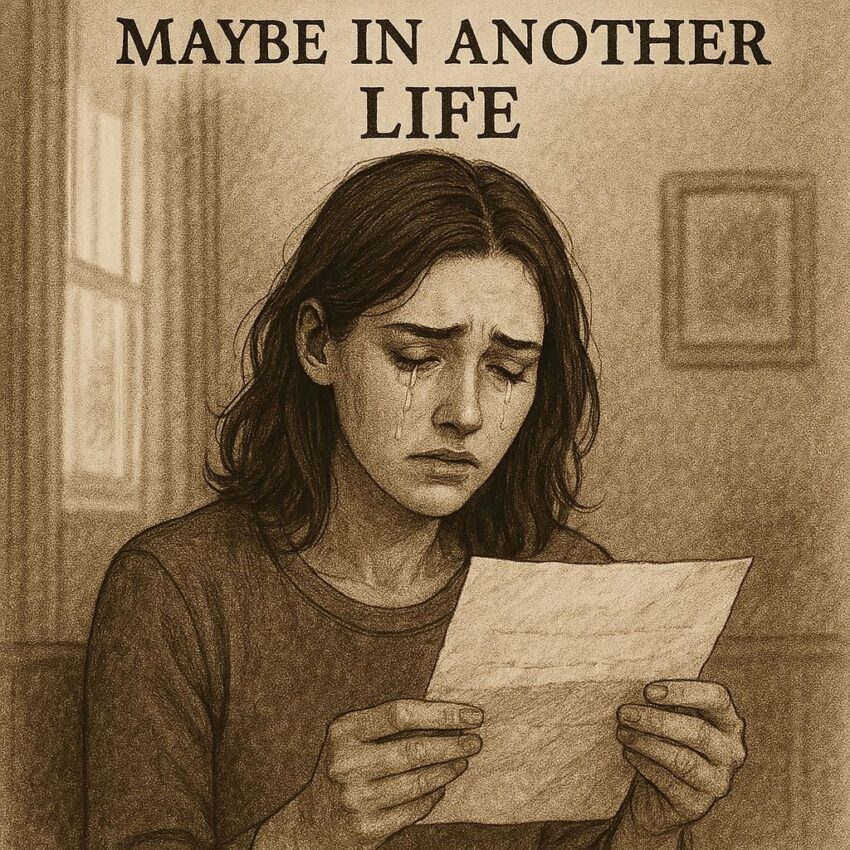
Maybe in Another Life
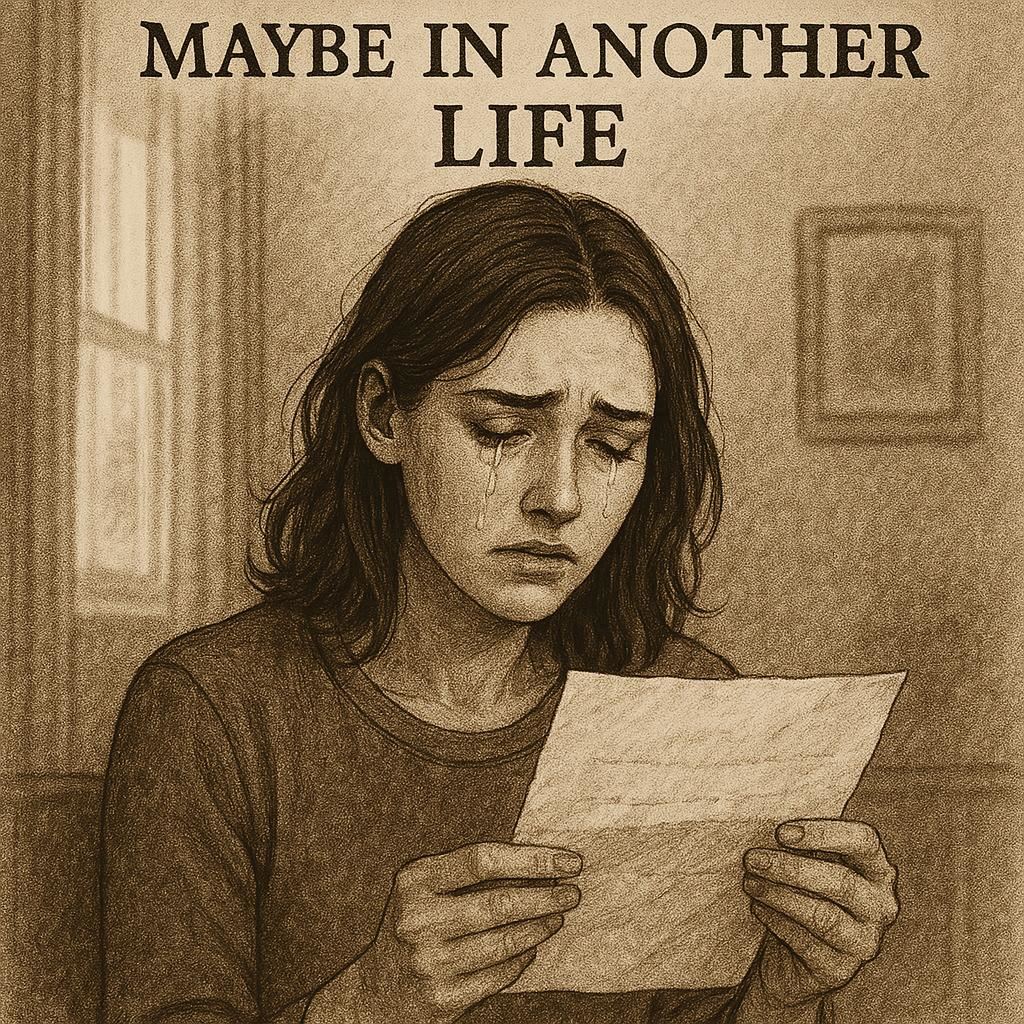
Chapter 1: The Silence That Became an Answer
At first, it was little things. A text left unanswered. A phone call that went to voicemail.
Elira thought maybe Caelum was just busy. He was always the kind of man who got lost in his thoughts, in books, in his long evening walks when the world felt too heavy. She had learned early in their relationship to give him space when he retreated into himself, trusting he’d return with that half-smile and some profound question about life that would make her laugh and roll her eyes.
But this was different.
Days turned into weeks. Every message she sent showed only one gray checkmark, never two. When she called, she got a mechanical voice telling her the number was unreachable. At first, she thought it was a glitch. Then she tried calling from her work phone. Blocked.
Social media was worse. His accounts had vanished from her feed. Not unfriended—blocked.
The first sting of panic had felt like betrayal. What had she done? They hadn’t fought. In fact, the last night she remembered with him had been quiet and tender—sharing takeout on her apartment floor, his head resting on her shoulder while he traced lazy circles on her wrist. There had been no warning, no crack in the foundation. And then—nothing.
For four months, Elira lived with the gnawing ache of abandonment. She replayed every word, every kiss, every silence, searching for a clue she had missed. Friends gave her cautious, pitying looks, shrugging when she asked if they had heard from him. His family, who had once welcomed her warmly, stopped answering her calls.
The silence itself became her answer. He had left her.
And that was worse than any fight.

Chapter 2: The Post That Changed Everything
It was a Saturday evening when the truth finally found her.
Her roommate, Dahlia, had left her laptop open on the kitchen table. Elira only meant to check her email, to distract herself from the heavy loneliness that had begun to feel permanent. But as soon as she opened the browser, the familiar blue banner of social media greeted her—and there he was.
Caelum.
His photo stopped her cold. Not a recent one, but a candid from last year: him laughing, looking off to the side, sunlight catching in his dark hair. It was a photo she had once saved, once pressed to her lips in the privacy of her room.
But it was the words beneath it that shattered her.
Rest in peace, Caelum. You fought so hard. May the heavens give you the peace you deserve.
Her eyes blurred as she scrolled. Comment after comment, a flood of condolences:
-
He was too young.
-
A beautiful soul gone too soon.
-
My heart is with his family.
Her hand flew to her mouth, her body trembling violently. She couldn’t breathe. Her ears rang.
No.
It couldn’t be true.
Her fingers scrolled faster, desperate for context. That’s when she saw it: Four months ago today. He left this world surrounded by family.
Four months. The exact moment he had disappeared from her life.
She pushed back from the table so suddenly the chair toppled over, her breath coming in shallow gasps. Anger slammed into her chest as hard as grief. Why didn’t anyone tell me? How could they keep this from her? How could they all look her in the eye—friends, family—and say nothing while she was breaking herself trying to understand his absence?
It wasn’t just grief she felt. It was betrayal.
Her tears blurred the screen as she whispered his name, over and over. She didn’t know what she was saying, who she was begging. But one thought anchored her spiraling: she had to see his mother. She had to know why.
She had to know everything.

Chapter 3: The Visit to His Mother
Elira hadn’t been to Aveline’s house in months, not since before Caelum vanished. She remembered the warmth of it—the small ceramic angels on the windowsill, the scent of lavender and baked bread lingering in the air, the way Aveline always kissed her cheeks as though she were already family.
But when she stood on the doorstep now, her hand hovering over the bell, the house felt heavier. Quieter. As though grief itself had moved in and taken up space in every corner.
Her knuckles rapped softly, but the sound echoed louder than she expected. The door creaked open, and there stood Aveline—her face pale, eyes sunken, her hair streaked with new strands of gray. The warmth Elira remembered was gone, replaced by a fragile weariness.
For a moment, neither spoke.
Then Aveline’s lips trembled, and she whispered, “Elira.”
The sound of her name in that voice cracked something inside her. Tears welled before she could stop them. “Why didn’t anyone tell me?” Elira’s voice was ragged, her throat raw. “Why did I have to find out from a post?”
Aveline’s eyes closed, as if bracing herself against the question. She stepped aside and motioned for Elira to come in. The house smelled different now—not of bread, but of dust and untouched air, like the world had stopped moving inside these walls.
They sat in the living room, surrounded by photos of Caelum. His childhood smile in a school portrait. A teenage Caelum holding a guitar. The last one—his frame thinner, his smile gentler—looked recent. Elira’s eyes stung.
“I wanted to tell you,” Aveline said finally, her voice trembling with the kind of guilt that carves a permanent line in the soul. “But Caelum… he made us promise. He didn’t want you to see him like that. Not when the illness was eating him away.”
Elira’s breath caught. “Illness?”
Aveline’s gaze dropped to her folded hands. “Pancreatic cancer. By the time they found it, it was too late. He had only months left. He was in so much pain, but he refused to let it touch you. He said…” her voice broke, “…he said he loved you too much to make you watch him die.”
The words landed like a stone to the chest. Elira’s body trembled, a thousand emotions colliding—rage, sorrow, love, betrayal. “So he left me thinking I wasn’t enough. That he didn’t want me.”
Aveline reached for her hand, gripping it tightly. “No, Elira. You were the only thing he wanted. Every day, even in pain, he asked about you. He looked at your photo when he couldn’t sleep. He—” her voice faltered, “—he cried for you more than for himself. But he wouldn’t let us call you. He blocked you so you wouldn’t see the truth until…”
Her hand slipped away, reaching for the coffee table drawer. Slowly, carefully, she pulled out an envelope, its paper already soft at the edges, like it had been touched too many times.
“He left this for you. He told me, ‘If she ever comes, give her this. It’s all I have left for her.’”
Elira stared at the envelope, her heart pounding. Her fingers trembled as she took it, the weight of it almost unbearable. She pressed it to her chest, eyes closing as if holding it could undo the last four months.
“Thank you,” she whispered, though the words felt too small.

Chapter 4: The Letter
The envelope was worn, yellowed at the creases. His name was scrawled on the back in his unmistakable handwriting—slanted, elegant, a little uneven from when he wrote too quickly. Her fingers hesitated before tearing it open, as though breaking the seal meant breaking him all over again.
Inside was a letter, written in dark blue ink. The paper bore faint watermarks, stains that blurred certain words. Not all of them were hers. Some were his—drops where the ink feathered out, smudges where his hand must have shaken.
Her chest ached as she began to read.
My Elira,
I don’t know how to begin, except by saying I’m sorry. I know I’ve hurt you. I know you’ve spent months wondering what you did wrong, when the truth is—it was never you. It was me, and it was the cancer that stole me before my time.
When the doctors told me I had only a handful of months, I thought of you first. Of your laugh, your stubbornness, the way your eyes narrow when you’re about to prove me wrong. And I thought: she cannot see me like this. I can’t let her watch me wither away. I wanted your memories of me to stay alive, not be clouded by the hospital walls and the smell of medicine.
So I did the cruelest thing love could do—I left. I blocked you. I asked everyone not to tell you. Because I knew, if you saw me fading, you would have stayed. You would have held my hand through every needle, every scream, every night I couldn’t breathe. And I couldn’t bear it. I couldn’t let your last memory of me be a body broken by something I couldn’t fight.
Here Elira’s breath caught. The ink dipped and spread across several words, blurred into watery shadows. Her fingertips traced them gently, realizing they weren’t mistakes of the pen. Caelum had been crying when he wrote this. The thought split her open in ways she hadn’t thought possible. Even now, his tears met hers on the page.
But Elira, not a day passed that I didn’t ache for you. I dreamed of you. When I closed my eyes, I saw you sitting at the edge of our bed, waiting for me. I saw you in the smell of rain, in the sound of laughter that wasn’t yours but made me miss you more. I loved you with every piece of strength I had left, and when I couldn’t speak, I whispered your name into the silence.
Elira noticed the handwriting faltered here, the once-confident strokes thinning into uneven, shaky lines. She imagined his hands trembling, his body already weak, yet still forcing himself to write for her.
I wanted a future with you. I wanted to marry you under the sycamore tree we always passed by. I wanted mornings filled with your hair tangled against my chest and nights where the world was only ours. But this life was too short. It stole us before we could begin.
A faint stain, darker than the others, bloomed in the corner of the paper. The mark had bled outward, as if a single tear had fallen there and refused to dry. Elira pressed her thumb against it, wishing she could hold his face in that moment, wipe away the grief that had soaked into the letter.
Do you remember the night you told me about reincarnation? You laughed, saying, “Maybe in another life we’ll get it right.” I never told you then, but I held onto that. It became my prayer. My anchor. And now, it is my only hope.
The last lines trailed with exhaustion—the loops of his letters smaller, the ink faded, as though the strength to finish had nearly left him.
So if heaven exists, I will wait for you there. If the soul travels on, I will find you again, no matter how many lives it takes. In that life, Elira, I will not waste a single moment. I will love you in the open, without fear, without time to steal us apart.
Until then, keep me in your heart. Let me live there, where the illness cannot touch me. And when you whisper my name, know that I hear you.
Always yours,
Caelum
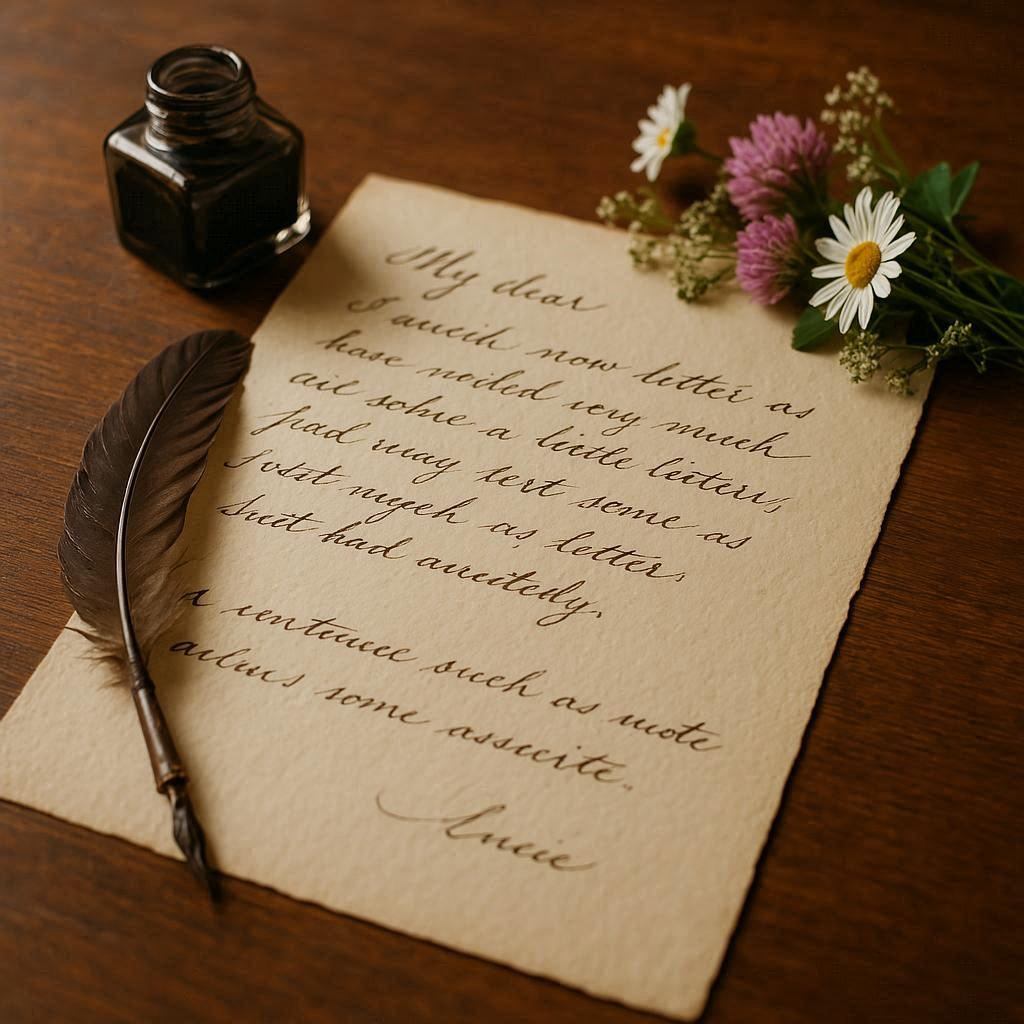
Elira’s hands shook so hard the paper nearly slipped from her grasp. Her tears fell onto the page, mingling with the stains he had left behind, as though across time their grief had finally met. She pressed the letter to her lips, to her heart, curling around it like it was the last piece of him she could hold.
Chapter 5: The Park
The park was quiet, caught in the golden hour of late afternoon. The air smelled of cut grass and faint honeysuckle, and the laughter of children playing somewhere distant only sharpened the ache in Elira’s chest. Life went on around her, as if the world hadn’t just collapsed.
She sat on a weathered wooden bench, the letter resting in her lap. Her fingers smoothed the creases she had made from folding and unfolding it too many times. She had read it a dozen times already, and still, each word was a fresh wound. Each smudge of ink was a reminder that he had written this with trembling hands, with tears he hadn’t been able to hide.
Elira tilted her head back, staring at the sky as the colors deepened from blue into shades of fire and violet. She imagined him there, beyond the clouds, his voice in the hush of the wind that rustled the trees above her.
Her mind pulled her backward, unbidden, to fragments of the life they had shared.
The night they had fallen asleep on her tiny couch, a bowl of popcorn tipped over between them. The way he had laughed until he cried when she mispronounced the name of his favorite philosopher. The mornings when he would tug her back into bed, pressing his cold toes against her legs just to make her shriek and swat at him.
And the last night—the quiet one, with takeout containers scattered around them, his head heavy on her shoulder. He had looked at her then with a softness she didn’t understand, as if memorizing her face. Now she knew. He must have already been planning his goodbye.
Her throat tightened. “You should have let me stay,” she whispered, though the words were stolen by the breeze. “I would have stayed, Caelum. Through everything. You didn’t have to do it alone.”
The anger burned again, hot and sharp, but it was tangled with love so fierce it felt like drowning. She hated him for leaving, for deciding what she could bear. But she also loved him more for it—for loving her enough to try and protect her from the cruelest parts of life.
The letter trembled in her hands as she read the last lines again:
So if heaven exists, I will wait for you there. If the soul travels on, I will find you again, no matter how many lives it takes. In that life, Elira, I will not waste a single moment.
Her tears spilled freely now, dripping onto the page, mingling with his. It felt like their grief had finally found each other, across time, across death.
She clutched the paper to her chest, curling forward as though she could fold herself around him, keep him safe inside her heart where illness could never touch him again.
The park grew quieter. The laughter faded. A breeze swept through, brushing her cheeks, and for a moment, she swore she felt him—like a hand passing gently through her hair, like a breath against her ear.
Her lips parted, and the words slipped out, soft and trembling, carried by the wind:
“Maybe in another life, Caelum. Maybe in another life.”
The wind rustled the branches above her, as though the world itself was answering back.
And though she sat alone on that bench, clutching a tear-stained letter, Elira felt him everywhere—woven into the air, into the fading light, into the beating of her own heart.
For the first time in months, the silence didn’t feel empty.
It felt like love.